Background
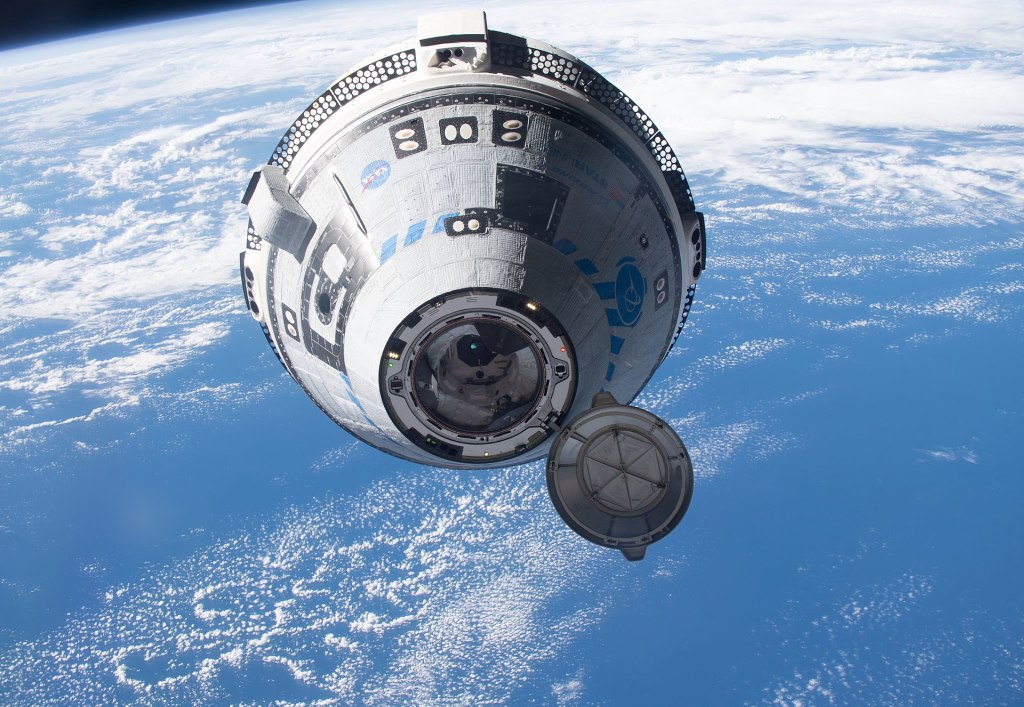
During my time at The Boeing Company, I was privileged to contribute to the Boeing Starliner Program. This initiative facilitates NASA astronauts’ transportation to and from the International Space Station (ISS), ensuring reliable access from US soil. Unfortunately, due to Boeing’s proprietary constraints, I am unable to share visual assets and files related to the tool I developed for this project.
Sublimator Tool
Thermal control is a critical aspect of space transportation due to the extreme temperatures encountered in outer space. Spacecraft must maintain optimal temperature and humidity levels to ensure the safety of both astronauts and equipment.
Before launch, ground cooling systems are utilized to regulate the temperature throughout the spacecraft. However, these systems are disconnected shortly before launch, necessitating alternative methods to manage temperature and humidity until the spacecraft can dock with the ISS.
One effective passive cooling technique employed in spacecraft is the use of radiator panels. These panels serve to dissipate heat energy carried by the coolant away from the spacecraft by radiating it into space. While radiator panels are highly effective, they are not immediately usable upon ascent into orbit. This is because it takes time for the panels to cool down in the vacuum of space.
Additionally, radiator panels are typically attached to the service module of the spacecraft, which is ejected prior to landing. This ejection exposes the spacecraft’s heat shield, which protects it from the extreme temperatures experienced during descent back to Earth. Thus, while radiator panels are crucial for thermal control during various phases of the mission, their usage is limited by specific operational constraints and mission requirements.
In response to the challenges posed by spacecraft thermal control, a device known as a sublimator is employed. The sublimator operates by generating a thin ice sheet, and as the coolant transfers heat to this sheet, it sublimates directly into space. Given that water serves as the source for the sublimator, it is imperative to accurately monitor the water quantity in the tank and understand its implications for mission parameters.
Presently, the spacecraft’s computers provide only a percentage value for the tank’s quantity, which lacks the specificity needed to analyze various factors such as time and flow rate. Recognizing this limitation, I developed a tool at Boeing that enables mission control to forecast sublimator runtime. This capability empowers mission control to make crucial decisions, such as determining whether there is sufficient time to extend orbit in the event of changes to landing parameters.
Furthermore, my tool allows for comparisons with past missions, such as Orbital Flight Tests 1 and 2, enabling mission control to leverage historical data for informed decision-making. Moreover, astronauts onboard have the ability to replenish the source tank with water. By incorporating this data into the tool, it can dynamically adjust sublimator parameters to account for the addition of water.
Overall, the tool I developed plays a pivotal role in facilitating real-time decision-making and serves as a guiding resource for mission control during Starliner missions, ensuring the efficient management of thermal control systems and enhancing mission success.
Condensation Issue
In addition to developing the sublimator tool for Boeing, I also contributed to resolving a condensation challenge. Unlike most spacecraft, Starliner is designed for land-based landings rather than water landings. Upon landing, humidity control systems, as well as thermal control systems, are shut off. Consequently, the sublimator becomes ineffective without the vacuum of space, as sublimation cannot occur, resulting in water simply being expelled from the spacecraft.
During the landing phase, humidity levels increase due to heightened astronaut metabolic rates, particularly during launch and landing, leading to increased respiration and humidity release into the air. It’s worth noting that the spacecraft’s internal environment remains uncontrolled until ground cooling carts are reconnected approximately 30 minutes after touchdown.
Once ground cooling is established, cold coolant circulates through the spacecraft. However, given the relatively high internal temperature, the cabin’s dewpoint may also be elevated, potentially leading to condensation accumulation. This poses a significant issue for Starliner, a reusable spacecraft, as water buildup can foster mold growth during the spacecraft’s processing, which can sometimes span a considerable duration.
During my time at Boeing, I aided in quantifying the potential condensation buildup within the spacecraft, enabling us to assess whether it would pose a significant issue. This analysis served as the foundation for developing viable solutions to mitigate condensation concerns post-landing, thereby ensuring the spacecraft’s continued operational readiness.
 Daniel Opong-Duah